
Riviera Maya Private Daily Tours and Travel Packages
Enjoy our personalized custom tailored Rivera Maya Private Daily Tours and Travel Packages. We move at your own speed to discover and experience the wide range of sites. Discover the Rivera Maya with a private guide that can show you the real Rivera Maya off the beaten track and on a personal time schedule. The cost of the tour depends on the Number of People participating.
CHICHEN ITZA – IKKIL – VALLADOLID
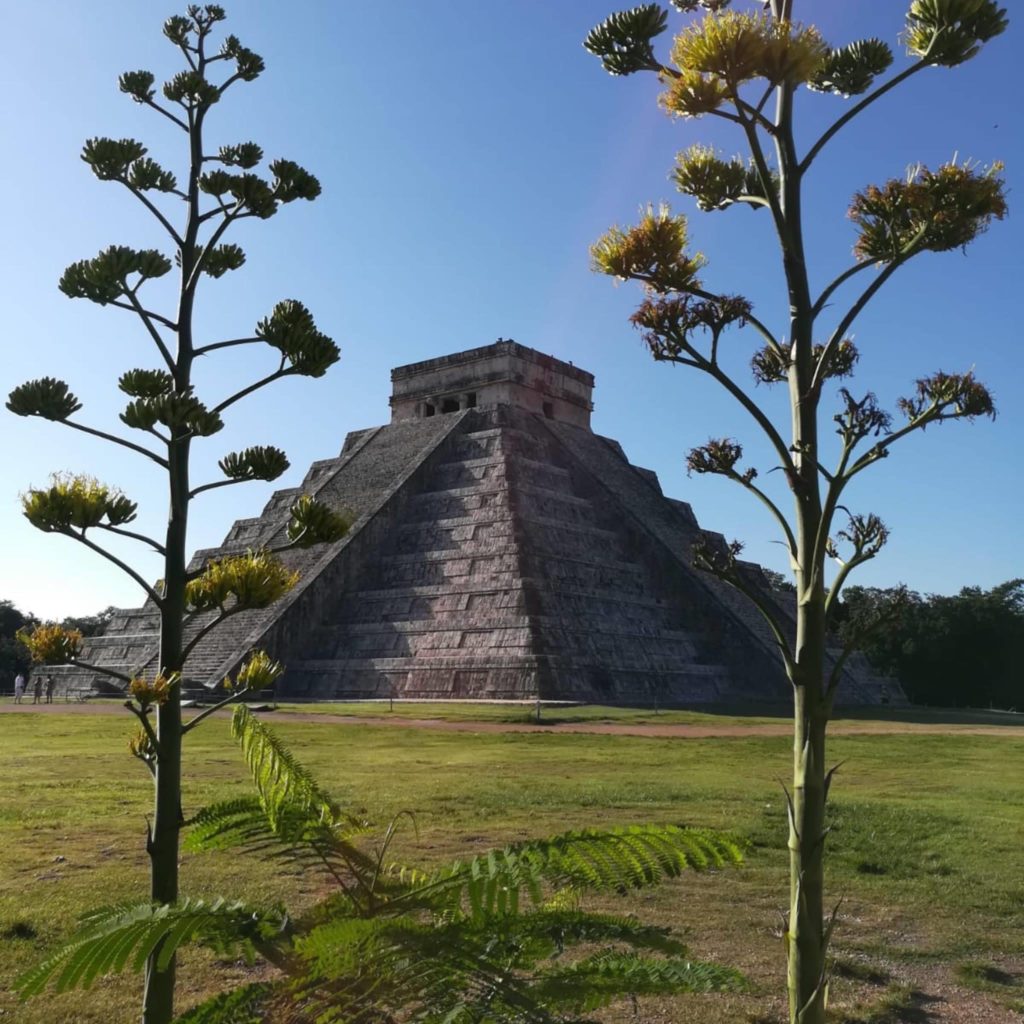
Chichen Itza is one of the most visited archaeological sites in Mexico. This pre-Columbian city built by the Maya was named a UNESCO World Heritage Site in 1988. In 2007 a massive step pyramid, known as El Castillo or Temple of Kukulcan which dominates the ancient Mayan city of Chichen Itza was named one of the New Seven Wonders of the World.
Ikkil – one of the most beautiful cenotes in Yucatan. A natural freshwater pool of almost perfect circular shape of 60 meters. The height of the cenote is 27 meters and the water is 50 meters deep. The cenote is surrounded by a beautiful tropical garden which is home to a number of different species of birds. Spider monkeys also live in the area.
Until the beginning of the 20th century, Valladolid was the third largest and most important city of the Yucatán Peninsula, after Mérida and Campeche. The city is deeply Mayan. Many women wear the traditional Mayan huipil — white cotton blouses or dresses adorned with bright, flowered embroidery and sold in places like the Mercado de Artesanias located across the city’s beautiful, newly refurbished Parque Principal.
The tour:
Sightseeing in Chichen Itza: Kukulkan Pyramid, Astronomical Observatory, Ballgame Court, Temple of a Thousand Columns, Temple of the Jaguar, the Temple of Warriors, Sacred Well. Free time will be provided for shopping crafts and souvenirs.
Transfer to Ikkil. Swiming and relax in a natural freshwater. Lunch in a local restaurant offering Yucatecan cuisine and local crafted beers. Visit to the colonial city of Valladolid. Transfer to the hotel.
What to take with you: Sun protection, swimming suit, towel. Lockers and lifejackets can be rented with additional fee. You will be required to shower before you enter the pool at the cenote. We recommend that visitors use eco-friendly sunblock, because this helps to preserve the environment.
Price includes: transportation to / from hotel, entrance tickets, guide, a bottle of water, lunch. Price does not include other beverages and tips.
CHICHEN ITZA EXPRESS
If you would like to spend more time relaxing in your hotel we also have an option to visit the archeological site and return to the hotel.
What to take with you: Sun protection. Additional snacks and water. We recommend that visitors use eco-friendly sunblock, because this helps to preserve the environment.
Price includes: transportation to / from hotel, entrance tickets, guide, a bottle of water. Price does not include other beverages and tips.
TULUM – CENOTE
Tulum – the 13th-century, walled Mayan city served as a major port for Coba. Jade, obsidian, ceramics, incense burners, salt and textiles were among some of the goods brought by traders to Tulum by sea that would be dispersed inland. The ruins are situated on 12-meter tall cliffs, inside the Tulum National Park overlooking one of the most beautiful beaches in the Caribbean.
Cenote Snorkeling in the natural limestone pool filled with the crystal clear water, which has a temperature of 24 degrees
Celsius. Enjoy the underwater world of stalactites and stalagmites.
The tour:
Sightseeing in the archeological zone: Temple of the Frescoes, Temple of the Descending God and Temple of the Wind, El Castillo.Swimming in the turquoise sea and relax on the beach. Drive through the jungle to the system of the water filled caves named Cenote. Snorkeling in the natural limestone pool filled with the crystal clear, fresh (24*C) water. Observing stalactites and stalagmites. Lunch in a local restaurant offering Yucatecan cuisine. Transfer to the hotel.
What to take with you: Sun protection, swimming suit, towel. You will be required to shower before you entering the cenote. We recommend that visitors use eco-friendly sunblock, because this helps to preserve the environment.
Price includes: transportation from / to the hotel, entrance fees, mineral water, mask, tube and life jacket, lunch.
Price does not include other beverages, lunch refreshments and tips.
TULUM EXPRESS
If you would like to spend more time relaxing in your hotel we also have an option to visit only the archeological site and return to the hotel.
The tour:
Sightseeing in the archeological zone: Temple of the Frescoes, Temple of the Descending God and Temple of the Wind, El Castillo. Swimming in the turquoise sea and relax on the beach. Transfer to the hotel.
What to take with you: Sun protection, swimming suit, towel. Additional snacks and water. We recommend that visitors use eco-friendly sunblock, because this helps to preserve the environment.
Price includes: transportation from / to the hotel, entrance tickets, guide, a bottle of water. Price does not include other beverages and tips.
TULUM – YAL-KU LAGOON
Tulum – the 13th-century, walled Mayan city served as a major port for Coba. Jade, obsidian, ceramics, incense burners, salt and textiles were among some of the goods brought by traders to Tulum by sea that would be dispersed inland. The ruins are situated on 12-meter tall cliffs, inside the Tulum National Park overlooking one of the most beautiful beaches in the Caribbean.
Yal-Ku is a little lagoon with a mixture of salt and fresh water. A great place to spend some relaxing time Yal-Ku is inhabited by many species, who find in it a place to grow and develop their offsprings safe from predators. Before reaching a certain maturity and transitioning into open sea, this species coexist in a spectacular, natural aquarium.
The tour:
Sightseeing in the archeological zone: Temple of the Frescoes, Temple of the Descending God and Temple of the Wind, El Castillo. Drive through the jungle to the Yal-Ku lagoon. Snorkeling in the lagoon. Transfer to the hotel.
What to take with you: Sun protection, swimming suit, towel. Additional snacks and water. We recommend that visitors use eco-friendly sunblock, because this helps to preserve the environment.
Price includes: transportation from / to the hotel, entrance fees, mask, tube and life jacket, guide, a bottle of water.
Price does not include other beverages and tips.
CENOTE TOUR
The Yucatan Peninsula is characterized by its mainly limestone bedrock. The porous bedrock does not allow for fresh water to accumulate above ground in forms of rivers and lakes. Instead, rain water filters through the perforated rock and collects underground. At times, the bedrock destabilizes and it collapses creating a cenote. There are different types of cenotes. Some are deep and narrow, some are shallow and wide. They can be semi-open or entirely cavernous. For ancient Mayas cenotes provided year-round access to fresh water. They were vitally important for the survival of the local population and were embedded into the religious belief system. The Maya believed cenotes to be a gateway to Xibalba, the underworld, and the god of rain, Chaac, was believed to live there.
The tour:
Cenote swimming and snorkeling. For certified divers we offer private cavern tours.
What to take with you: Sun protection, swimming suit, towel. You will be required to shower before you entering the cenote. Additional snacks and water.
Price includes: transportation from / to the hotel, entrance fees, mask, tube and life jacket, guide, a bottle of water.
Price does not include beverages and tips.
COBA – SNORKELING WITH THE TURTLES ON THE REEF
Archaeologists believe Coba was one of the most important Mayan cities on the Yucatan Peninsula.
Coba means ‘waters stirred by the wind’, an appropriate Mayan name as the city is surrounded by two large lagoons. The city is hidden in the heart of the jungle. Visitors can enjoy shaded walkways that are the original sacbeos (white roads), three settlements that show the architecture of this once large city, 2 ball courts and climb the highest (42m) Mayan pyramid in the Yucatan, Nohoch Mul. The archeological site contains numerous stelae (free-standing carved stone slabs), that document ceremonial life and important events of the city. Some stelae here depict women, suggesting the city had many female rulers.
The tour:
Transfer to Coba. Sightseeing of the archeological site by bicycle or rickshaws driven by real descendants of Maya.
Visit to Ballgame Court, the Group of Paintings and climbing the biggest pyramid of Yucatan – the 42 meters tall, Nohoch Mul.
Transfer to Tulum which is picturesquely situated on the shores of the Caribbean. Snorkeling at the coral reef with an opportunity to admire the underwater marine life (turtles, rays, and the multi-colored fish). Return to the hotel.
What to take with you: Sun protection, swimming suit, towel. Additional snacks and water. We recommend that visitors use eco-friendly sunblock, because this helps to preserve the environment.
Price includes: transportation from / to the hotel, entrance fees, lunch,mask, tube and life jacket, guide, a bottle of water.
Price does not include beverages and tips.
EK BALAM – COBA – TULUM
Ek Balam is a unique, interesting and lesser-known Mayan Ruins site with impressive structures that is surrounded by dense jungle. In Maya language The word Ek Balam means “black jaguar”. The city is composed of several temples, two palaces and a large pyramid (El Torre) which is located in the center. Buildings were designed in the northern Petén architectural style.
Cobá was one of the most important Mayan cities on the Yucatan Peninsula. The name of the city means ‘waters stirred by the wind’, an appropriate Mayan name as it is surrounded by two large lagoons. The city is hidden in the heart of the jungle.
Visitors can enjoy shaded walkways that are the original sacbeos (white roads), three settlements that show the architecture of this once large city, 2 ball courts and climb the highest (42m) Mayan pyramid in the Yucatan, Nohoch Mul. The archeological site contains numerous stelae (free-standing carved stone slabs), that document ceremonial life and important events of the city.
Some stelae here depict women, suggesting the city had many female rulers.
Tulum – the 13th-century, walled Mayan city served as a major port for Coba. Jade, obsidian, ceramics, incense burners, salt and textiles were among some of the goods brought by traders to Tulum by sea that would be dispersed inland. The ruins are situated on 12-meter tall cliffs, inside the Tulum National Park overlooking one of the most beautiful beaches in the Caribbean.
The tour:
Transfer to Ek Balam. Sightseeing of the archeological site: Central Square, Stale Platform, Acropolis Pyramid, the Arc, the Twin House and the Ballgame Court. Transfer to Coba, Riding a bicycle or rickshaws on the gravel roads called Sacbe. Sightseeing of the most important buildings of the city: Ballgame Court, the Group of Paintings and the biggest pyramid of Yucatan – the 42 meters tall, Nohoch Mul. Lunch. Transfer to Tulum. Visit to the Temple of the Frescoes, the Temple of Descending God and Temple of the Wind. Return to the hotel.
What to take with you: Sun protection, trekking shoes, additional snacks and water.
Price includes: transportation to / from hotel, entrance fees, guide, a bottle of water, lunch.
Price does not include other beverages and tips.
QUADS – JUNGLE
Short and tall tropical jungles are the predominant natural vegetation types of the Yucatán Peninsula. Yucatan jungle is home to an extraordinary variety of plant and animal life, including a number of species that are unique to the region. Some of the species are threatened with extinction or are protected include five species of cat (jaguar, puma, ocelot, margay and jaguarundi). The agile spider monkey also inhabits some areas of the region.
The Yucatan Peninsula is characterized by its mainly limestone bedrock. The porous bedrock does not allow for fresh water to accumulate above ground in forms of rivers and lakes.
Instead, rain water filters through the perforated rock and collects underground. At times, the bedrock destabilizes and it collapeses creatinga cenote. There are different types of cenotes. Some are deep and narrwo, some are shallow and wide. they can be semi-open or entirely cavernous. For ancient Mayas cenotes provided year-round access to fresh water. They were vitally important for the survival of the local population and were embedded into the religious belief system. The Maya believed cenotes to be a gateway to Xibalba, the underworld, and the god of rain, Chaac, was believed to live there.
The tour:
Adventure and nature all in one tour! Travel throughout the Yucatan jungle by quads and the off-road truck. Swim in two cenotes situated in the beautiful scenery of the tropical forest.
What to take with you: Sun protection, swimming suit, towel. Additional snacks and water. We recommend that visitors use eco-friendly sunblock, because this helps to preserve the environment.
Price includes: transportation from / to the hotel, entrance fees, mask, tube and life jacket, guide, a bottle of water.
Price does not include other beverages and tips.
JEEP SAFARI – SIAN KA’AN
In the language of Maya Sian Ka’an means Gate to Heaven. Sian Ka’an is home to thousands of species of flora and fauna, among them: charismatic mammals such as jaguar, puma, ocelot and central american tapir. It provides habitat for a large number of resident and migratory bird species. There is a great diversity of marine life, including the west indian manatee, four species of nesting marine turtles and hundreds of fish species. Mangroves are habitat for numerous species of animals such as crocodiles and many waterbird species like pelican, roseate spoonbill, white ibis and several species of herons. For many species of fish and invertebrates, mangroves are important as breeding areas; lobster, shrimp, and the snapper fish are in this group.
Sian Ka’an was declared a World Heritage Site by the UNESCO IN 1987.
The tour:
Jeep ride to the fishing village of Punta Allen. Boarding motorized boats. Water safari – Enjoy the beautiful coastal wildlife, waterfowl, as well as observe dolphins and turtles in their natural habitat. Snorkeling in the Caribbean with an opportunity to admire the underwater marine life. Lunch. Return to the hotel.
What to take with you: Sun protection, swimming suit, towel, binoculars. Additional snacks and water. We recommend that visitors use eco-friendly sunblock, because this helps to preserve the environment.
Price includes: transportation from / to the hotel, entrance fees, mask, tube and life jacket, guide, a bottle of water, lunch and non alcohol beverages served during lunch.
Price does not include other beverages and tips.
HOLBOX – Swimming with Whale Shark
Whale shark is a slow-moving, carpet shark and the largest known extant fish species weighing up to 11 tons. The average size of adult whale sharks is estimated at 9.8 m (the largest at 11 m). They have very large mouths and are filter feeders. In order to eat they passively filter everything in their path. Whale shark mouths can contain over 300 rows of tiny teeth and 20 filter pads.
They feed almost exclusively on plankton and small fishes, and pose no threat to humans. Younger whale sharks are gentle and can play with divers. In 2011, more than 400 whale sharks gathered off the Yucatan Coast. It was one of the largest gatherings of whale sharks recorded.
Holbox an oasis of peace and tranquility is a part of the Yum Balam Nature Reserve. It is separated from the mainland by the Yalahau Lagoon, which is home to flamingos and pelicans. Most of the people of Holbox Island make their living fishing. The streets of Holbox Island are made of white sand, common of Caribbean islands, and there are very few cars. Electricity reached the island in 1987, and even now, visitors should expect spotty cell and WiFi signals. Google Maps doesn’t recognize the sandy pathways that function as informal streets. Holbox is a great destination for street art. Many homes are painted in bright colors, and it’s not unusual for local businesses to hand-paint signs or decor for their restaurants and shops.
The tour:
Transfer to the cruise terminal. Boarding motor boats. Enjoying the cruize and observing birds nesting in the mangroves and lagoon: ibis, flamingos, pelicans and frigatebirds.
Swimming with whale sharks under the supervision of the experienced and professional guide. Lunch. Rest and relax on the beach. Return to the hotel.
What to take with you: Sun protection, swimming suit, towel. Additional snacks and water. We recommend that visitors use eco-friendly sunblock, because this helps to preserve the environment.
Price includes: transportation from / to the hotel, entrance fees, mask, tube and life jacket, guide, lunch, a bottle of water.
Price does not include other beverages and tips.
PLEASE NOTE: THE SEASON FOR THIS TOUR LASTS ONLY FROM JUNE 1 TO SEPTEMBER 15.
CATAMARAN ON THE COZUMEL ISLAND
Cozumel is considered one of the best diving and snorkeling areas in the world. Cozumel reef is part of the Mesoamerican Reef, the second largest reef system on earth after the Great Barrier reef. Divers and snorkelers from all over the world come to Cozumel to admire more than 500 different species of fish and 65 different sone corals. Some of them only occur in this part of the Caribbean. Cozumel is home to four species of sea turtles: Green Turtle, the Hawksbill Turtle, the Loggerhead and the Leatherback Turtle. You can also observe eagle rays (December to February), nurse sharks, bull sharks (December and January) and manta rays.
The tour:
Transfer by ferry to Cozumel island. Boarding catamaran. Relaxation with open bar with the local drinks and music. Catamaran cruise along the island. Snorkeling at the coral reef with an opportunity to admire the underwater marine life. Lunch served on the beach. Free time on the island with the use of kayaks, hammocks and trampoline. Shopping in the duty free shops in the town of San Miguel Cozumel. Return by ferry to Playa del Carmen and transfer to the hotel.
What to take with you: Sun protection, swimming suit, towel. We recommend that visitors use eco-friendly sunblock, because this helps to preserve the environment.
Price includes: transportation from / to the hotel, ferry tickets, open bar on the catamaran and during lunch, mask, tube and a life jacket, lunch.
Price does not include tips.
THE MAGIC RIVER
Buried in the dense jungle Muyil was one of the earliest and longest inhabited ancient Maya sites on the eastern coast of the Yucatan Peninsula. The archeological zone is located on the border of the Sian Ka’an Biosphere. In the language of Maya Sian Ka’an means Gate to Heaven. Sian Ka’an is home to thousands of species of flora and fauna, among them: charismatic mammals such as jaguar, puma, ocelot and central american tapir. It provides habitat for a large number of resident and migratory bird species. There is a great diversity of marine life, including the west indian manatee, four species of nesting marine turtles and hundreds of fish species. Mangroves are habitat for numerous species of animals such as crocodiles and many waterbird species like pelican, roseate spoonbill, white ibis and several species of herons. For many species of fish and invertebrates, mangroves are important as breeding areas; lobster, shrimp, and the snapper fish are in this group.
Sian Ka’an was declared a World Heritage Site by the UNESCO IN 1987. The tour features ancient canals made by Mayans hundreds years ago. Floating the canals is the perfect way to experience the beauty of this natural reserve.
The Yucatan Peninsula is characterized by its mainly limestone bedrock. The porous bedrock does not allow for fresh water to accumulate above ground in forms of rivers and lakes.
Instead, rain water filters through the perforated rock and collects underground. At times, the bedrock destabilizes and it collapses creating a cenote. There are different types of cenotes. Some are deep and narrow, some are shallow and wide. they can be semi-open or entirely cavernous. For ancient Mayas cenotes provided year-round access to fresh water. They were vitally important for the survival of the local population and were embedded into the religious belief system. The Maya believed cenotes to be a gateway to Xibalba, the underworld, and the god of rain, Chaac, was believed to live there.
The tour:
Transfer to the cenote situated in the beautiful Yucatan jungle. Snorkeling in the extraordinary scenery of the water filled cave. Transfer to the pre-Columbian town of Muyil. Floating the canals made by the Maya. Walk through the jungle and observation of the tropical flora and fauna. Visit to the Muyil archeological site. Sightseeing the most important structures: El Castillo and the Pink Palace. Climbing the pyramid. Return to the hotel.
What to take with you: Sun protection, swimming suit, towel. Additional snacks and water. We recommend that visitors use eco-friendly sunblock, because this helps to preserve the environment.
Price includes: transportation from / to the hotel, entrance fees, guide, boats, a bottle of water.
Price does not include other beverages and tips.
COZUMEL ISLAND – JEEP RALLY
Cozumel is the largest island in the Mexican Caribbean. Rich in history and natural wonders; a paradise in the middle of the sea with white beaches, beautiful sunsets and world-famous coral reefs. Cozumel is considered one of the best diving and snorkeling areas in the world. Cozumel reef is part of the Mesoamerican Reef, the second largest reef system on earth after the Great Barrier reef. Divers and snorkelers from all over the world come to Cozumel to admire more than 500 different species of fish and 65 different sone corals. Some of them only occur in this part of the Caribbean. Cozumel is home to four species of sea turtles: Green Turtle, the Hawksbill Turtle, the Loggerhead and the Leatherback Turtle. You can also observe eagle rays (December to February), nurse sharks, bull sharks (December and January) and manta rays.
The tour:
Transfer by ferry to Cozumel island. Visit to the Museum of the Island. Jeep safari through the most beautiful places of the island. Snorkeling on a coral reef, lunch on the beach.*
What to take with you: Sun protection, swimming suit, towel. Additional snacks and water. We recommend that visitors use eco-friendly sunblock, because this helps to preserve the environment.
Price includes: transportation from / to the hotel, ferry tickets, jeeps (4-people), entrance fees, mask, tube and life jacket, lunch, a bottle of water. Guide?
Price does not include other beverages and tips.
RIO LAGARTOS AND EK BALAM
Río Lagartos (Alligator River) is a fishing village populated by flamingos (and Mexicans). (It is famous for pink waters of the nearby salt mines). A paradise for all nature lovers, Río Lagartos is home to a great diversity of flora and fauna: 400 species of birds, 100 species of fish, about 105 species of reptiles and 57 of mammals.
Ek Balam is an unique, interesting and lesser-known Mayan Ruins site with impressive structures that is surrounded by dense jungle. In Maya language The word Ek Balam means “black jaguar”. The city is composed of several temples, two palaces and a large pyramid (El Torre) which is located in the center. Buildings were designed in the northern Petén architectural style.
The tour:
A trip to Ek Balam – hidden in the jungle Mayan archaeological zone. Sightseeing: Central Square, Stale Platform, Acropolis Pyramid, the Arc, the Twin House and the Ballgame Court. Transfer Rio Lagartos nature reserve. Cruise by boats through the calm waters of the lagoon. Observation of pink flamingos, pelicans, ibises, eagles and other species of wading birds. You even have the opportunity to see crocodiles living in the lagoon. Lunch. Return to the hotel.
What to take with you: Sun protection, swimming suit, towel. Additional snacks and water. We recommend that visitors use eco-friendly sunblock, because this helps to preserve the environment.
Price includes: transportation from / to the hotel, tickets, 6-people boats, water, lunch.
Price does not include other beverages and tips.
ISLA MUJERES
In Pre-Columbian times the island was sacred to the Maya goddess of childbirth and medicine, Ixchel. When the Spanish arrived in the 16th century they named it “Isla Mujeres” because of the many images of goddesses. The island was also a favorite stopping place for pirates in the early 1800’s. Isla Mujeres tempts with wide beaches and the surrounding turquoise Caribbean Sea. Catamaran trip is full of fiestas and fun, music and dancing.
The tour:
Catamaran cruise through the waters of the Caribbean Sea. Snorkeling at the coral reef with an opportunity to admire the underwater marine life fauna and flora. Open bar included. Relax on the beach. Walk around the cliff of the south coast of the island. Sightseeing: lighthouse, traditional Caribbean village and the temple of the goddess Ixchel. Opportunity to make photos of the splendid view of the island and the sea. Lunch. Transfer back to the catamaran for the continuation of fiesta. Return to the hotel.
What to take with you: Sun protection, swimming suit, towel. Additional snacks and water. We recommend that visitors use eco-friendly sunblock, because this helps to preserve the environment.
Price includes: transportation from / to the hotel, tickets, open bar on catamaran, mask and tube for snorkeling, life jacket, lunch.
Price does not include beverages during lunch and tips.
XELHA MAYAN RUINS AND
XCARET
MISTIC ENCOUNTER WITH ANCIENT MAYA
The ancient Maya used the Xel-Ha lagoon as a maritime port, but built their settlement in the jungle. Xel-Ha is thought to have played an important role in the spiritual development of the Maya. The port provided direct access to the Island of Cozumel, previously known as Ixchel, and honored the Maya goddess of fertility. Cozumel was part of an essential pilgrimage where Maya men and women performed their fertility ceremonies before marriage. Couples from all over the Yucatan and Central America would come to Xel Ha to access Cozumel. The Xel-Ha ruins feature several small stone temples and two cenotes. Xcaret also functioned as a port for navigation and an important Maya trading center. There are documents which suggest that Xcaret was one of the most active and economically significant Maya ports on the east coast. Away from crowds these archeological sites provide the visitors with the welcomed benefit of solitude and quiet.
What to take with you: Sun protection, trekking shoes, additional snacks and water.
Price includes: transportation from / to the hotel, entrance tickets, guide, a bottle of water.
Price does not include other beverages and tips.
This tour can be combined with a visit to one of the amusement parks: Rio Secretos ,Xcaret,Xelha ,Explor,Xoximilco,Xenses, or we can help you organizing the day in one of the parks for the whole family.
YUCATAN IN TWO DAYS
Yucatan State is home to many natural and cultural attractions, including archaeological sites, haciendas, cenotes, and wildlife.
Merida, the state capital, is nicknamed the White City. It arose from the merger of three major cultures: Mayan, Spanish and Lebanese.
The tour:
Day 1
Yucatan State is home to two Pueblos Mágicos, Valladolid, and Izamal. Until the beginning of the 20th century, Valladolid was the third largest and most important city of the Yucatán Peninsula, after Mérida and Campeche. The city is deeply Mayan. Many women wear the traditional Mayan huipil — white cotton blouses or dresses adorned with bright, flowered embroidery and sold in places like the Mercado de Artesanias located across the city’s beautiful, newly refurbished Parque Principal.
Chichen Itza is one of the most visited archaeological sites in Mexico. This pre-Columbian city built by the Maya was named a UNESCO World Heritage Site in 1988. In 2007 a massive step pyramid, known as El Castillo or Temple of Kukulcan which dominates the ancient Mayan city of Chichen Itza was named one of the New Seven Wonders of the World.
Ikkil – one of the most beautiful cenotes in Yucatan. A natural freshwater pool of almost perfect circular shape of 60 meters. The height of the cenote is 27 meters and the water is 50 meters deep. The cenote is surrounded by a beautiful tropical garden which is home to a number of different species of birds. Spider monkeys also live in the area.
itinerary:
Visit to the colonial town of Valladolid. Sightseeing in Chichen Itza: Kukulkan Pyramid, Astronomical Observatory, Ballgame Court, Temple of a Thousand Columns, Temple of the Jaguar, the Temple of Warriors, Sacred Well. Free time will be provided for shopping crafts and souvenirs.
Transfer to Ikkil. Swimming and relax in a natural freshwater. Lunch in a local restaurant offering Yucatecan cuisine and local crafted beers. Visit to the colonial city of Valladolid. Transfer to the capital of the Yucatan state Merida for sightseeing. Dinner and overnight stay in Merida.
Day 2
Uxmal was one of the largest cities of the Yucatán peninsula on the Ruta Puuc (Puuc Route), and was home to approximately 20,000 Maya.
Uxmal is an UNESCO World heritage site. Govenor’s Palace 98 meters long mosaic facade is one of the longest in pre-Columbian Mesoamerica and features 103 stone masks of the rain god Chac.
Celestun is a remote fishing village with a pristine sandy beach well known because of the huge population of flamingos.
Itinerary:
Breakfast and transfer to the ancient Maya city of Uxmal. Sightseeing: Palace of the Vicar, Great Pyramid, Pyramid of Magician, Ballgame Court, House of Turtles. Transfer to the small fishing village of Celestun. Cruise by boat the mangrove channels in search of pink flamingos. Relax on the beaches of the Gulf of Mexico. Dinner and transfer back to the hotel.
Price includes transport from / to the hotel, admission tickets, 1 breakfast and 2 dinners without drinks, accommodation in 3 * hotel, cruise boats, water, guide.
Send us an email to infolatintierra@gmail.com to set up a personal skype call